
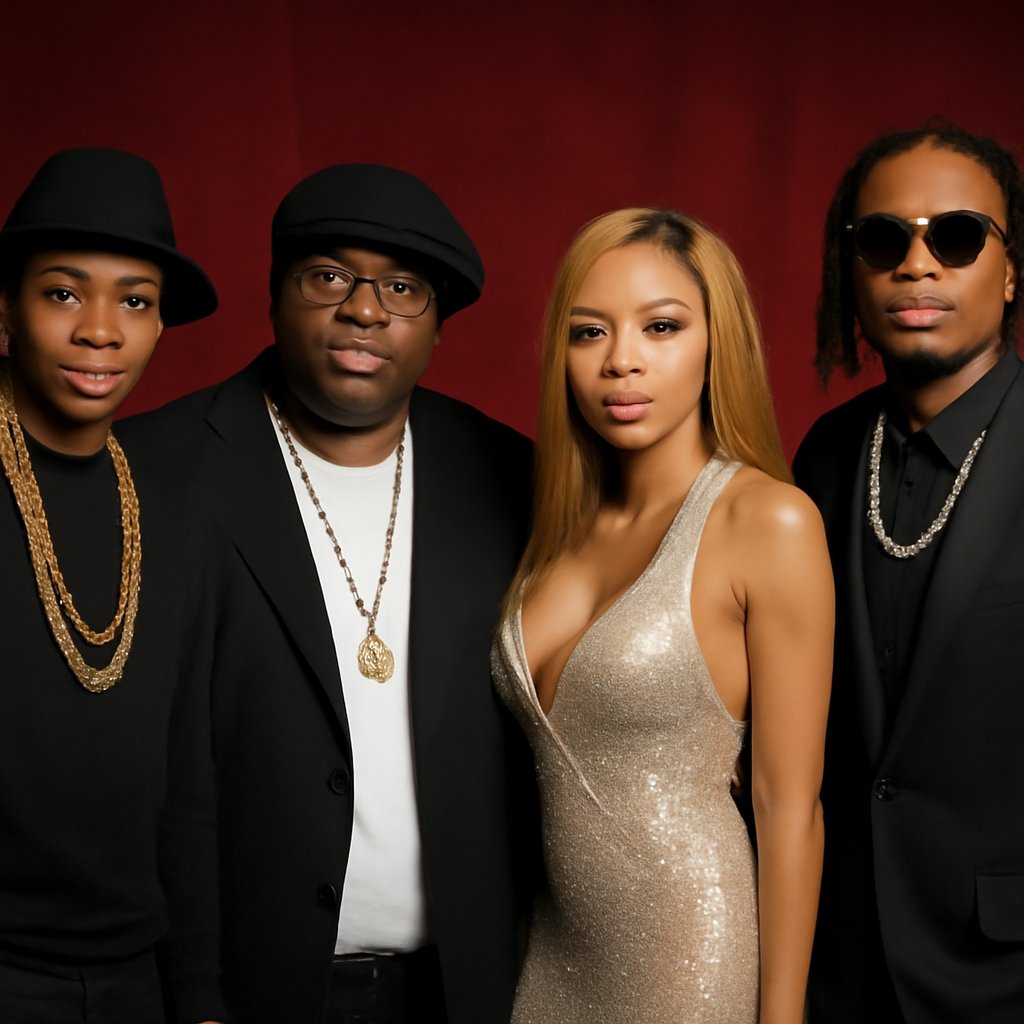
Covering Hollywood since 2014, you learn quickly that hip hop’s rise from Bronx block parties to the center of global entertainment isn’t just a music story—it’s a masterclass in Black excellence reshaping power dynamics at every level. What began as a creative response to economic hardship has become the cultural engine driving red-carpet fashion, streaming dominance, and billion-dollar Hollywood deals.
The evolution of hip hop through the years began in the South Bronx during the early 1970s when Jamaican-born DJ Kool Herc pioneered the technique of extending drum breaks at neighborhood parties. This innovative approach laid the foundation for MCing, breakdancing, and graffiti art, collectively known as the four elements of hip hop culture. Early pioneers like Afrika Bambaataa and Grandmaster Flash expanded these ideas, creating a vibrant community response to urban neglect. Celebrity circles from that era already noted how those parties became safe havens that later fed directly into mainstream entertainment pipelines.
DJ Kool Herc’s “merry-go-round” technique inspired a generation, while artists like The Last Poets wove spoken-word poetry that echoed civil rights struggles. Those raw roots quickly influenced pop culture long before the industry knew how to package them. The late 1970s saw the first recorded hip-hop tracks emerge, with “Rapper’s Delight” by The Sugarhill Gang becoming the genre’s breakthrough moment in 1979. That single introduced hip-hop to mainstream radio and proved that the culture could translate beyond live performances into commercial product. Grandmaster Flash’s “The Message” followed in 1982, establishing hip-hop as a vehicle for social commentary and storytelling that resonated far beyond the Bronx.
As the evolution of hip hop through the years moved into the 1980s, Run-DMC became the first rap group to crack mainstream success with their Aerosmith collaboration on “Walk This Way.” That crossover opened doors to MTV and major labels, shifting hip hop from underground force to commercial powerhouse. Run-DMC’s iconic Adidas sneakers and leather tracksuits became fashion statements that influenced youth culture globally, proving that hip-hop style could drive retail markets and brand partnerships. The group’s success paved the way for other 1980s pioneers like LL Cool J, Rakim, and Public Enemy to achieve platinum status while maintaining artistic credibility and cultural relevance.
The 1990s delivered the golden age, marked by the legendary rivalry between Tupac Shakur and The Notorious B.I.G. Their tension fueled endless headlines while the music confronted police brutality and inequality head-on. Hollywood took notice fast, casting rappers in films such as “Boyz n the Hood” and “Juice,” proving that hip-hop storytelling translated powerfully to the big screen. Beyond these two titans, the 1990s saw tremendous regional diversity flourish. West Coast G-funk dominated radio through artists like Snoop Dogg and Warren G, while East Coast boom-bap production defined the New York sound through figures like A Tribe Called Quest and De La Soul. The South emerged as a creative force with OutKast, UGK, and Three 6 Mafia pushing genre boundaries with innovative production and regional flavor.
The coastal tensions of the mid-1990s didn’t just dominate tabloids; they pushed artistic boundaries, yielding timeless albums like Dr. Dre’s “The Chronic” and Nas’s “Illmatic.” Those projects elevated lyricism and production, securing hip hop’s permanent seat at the entertainment table. Nas’s “Illmatic” in particular stands as a watershed moment—featuring production from DJ Premier, Pete Rock, and Q-Tip, it showcased how hip-hop could achieve critical acclaim and artistic depth while maintaining street credibility. Dr. Dre’s “The Chronic” introduced G-funk as a major commercial force and launched Snoop Dogg’s career, creating one of the most successful artist-producer partnerships in music history.
By the 2000s, artists like Eminem, Jay-Z, and OutKast were racking up multi-platinum sales and Oscar nominations. Eminem’s “8 Mile” showed how hip-hop narratives could anchor major studio films, sparking a wave of biopics and music-driven projects. Eminem became the best-selling artist of the 2000s decade and shattered racial barriers in a predominantly white rock-dominated music industry, proving hip-hop’s universal appeal. Meanwhile, Jay-Z transitioned from rapper to mogul, founding Roc-A-Fella Records and later Roc Nation, establishing a blueprint for artist entrepreneurship that countless musicians would follow. OutKast’s André 3000 and Big Boi captured Grammy Awards and mainstream success while maintaining innovative production and artistic independence, with their 2003 double album “Speakerboxxx/The Love Below” becoming a cultural phenomenon.
In the 2010s and 2020s, Kendrick Lamar, Drake, and Cardi B ruled charts while building acting careers, fashion empires, and production companies. Social media turned every album drop into a cultural event that intersects with award-show red carpets and premiere circuits. Kendrick Lamar’s “good kid, m.A.A.d city” elevated hip-hop lyricism and conceptual storytelling, while his 2017 album “DAMN.” made him a Grammy darling and critical favorite. Drake’s streaming dominance and crossover appeal—blending hip-hop with R&B and pop influences—made him one of the most-streamed artists globally. Cardi B’s rise from social media personality to Grammy-winning artist demonstrated how platforms like Instagram could launch rap careers, while her authenticity and fearlessness redefined female rap visibility in mainstream markets.
Platforms like Spotify and TikTok have opened doors wider, letting Atlanta trap and UK drill reach global audiences. Female rappers and LGBTQ+ voices have expanded the genre’s scope, challenging old gatekeepers and redefining what gets celebrated on major stages. Megan Thee Stallion’s rise following her viral “Hot Girl Summer” phenomenon and Lizzo’s boundary-pushing performances showed how female artists could dominate charts on their own terms. The rise of trap music through producers like Zaytoven and artists like Future and Young Thug created a sonic blueprint that influenced pop, country, and electronic music worldwide. Lil Baby and Gunna brought melodic trap to new heights, while the emergence of artists like Tyler, The Creator and Childish Gambino expanded hip-hop’s artistic possibilities through multimedia projects and genre experimentation.
The international expansion of hip-hop cannot be overstated. UK grime artists like Grime MC and later Skepta brought regional variations to global platforms. Korean hip-hop has developed a massive independent scene. Afrobeats artists like Wizkid and Burna Boy have seamlessly incorporated hip-hop production styles into their work, creating cross-continental collaborations that dominate streaming charts. This global reach has transformed hip-hop from an American cultural export into a truly worldwide phenomenon with localized variations that feed back into the mainstream.
Hip hop surpassed rock as the most consumed music genre in the United States in 2017 and has held that spot every year since. The genre generated over $15 billion in annual global revenue by 2023 through streaming, merch, and tours. More than 60 percent of recent Billboard Hot 100 hits carry hip-hop or rap elements. Hollywood films tied to the culture have collectively grossed billions, with “Straight Outta Compton” earning critical acclaim and Oscar recognition. “Straight Outta Compton” grossed over $200 million worldwide and sparked renewed interest in music biopics, leading to projects like “All Eyez on Me,” “Notorious,” and “Ice Cube’s Friday” franchise entries. Daily social-media chatter around hip-hop figures averages over 50 million engagements, keeping the celebrity cycle spinning.
Fashion represents another massive revenue stream—luxury brands from Gucci to Louis Vuitton now actively court hip-hop artists for collaborations and endorsements. Sneaker culture remains inseparable from hip-hop identity, with limited releases and artist collaborations generating millions in secondary market sales. Streetwear brands founded by or associated with rappers have become billion-dollar enterprises, with Kanye West’s Yeezy partnership with Adidas reaching valuations over $1 billion.
This is a story Black entertainment journalists have watched unfold for years: a genre that started on the margins now dictates the tempo of Hollywood power, red-carpet culture, and worldwide pop trends. Its influence on music, film, and celebrity remains