
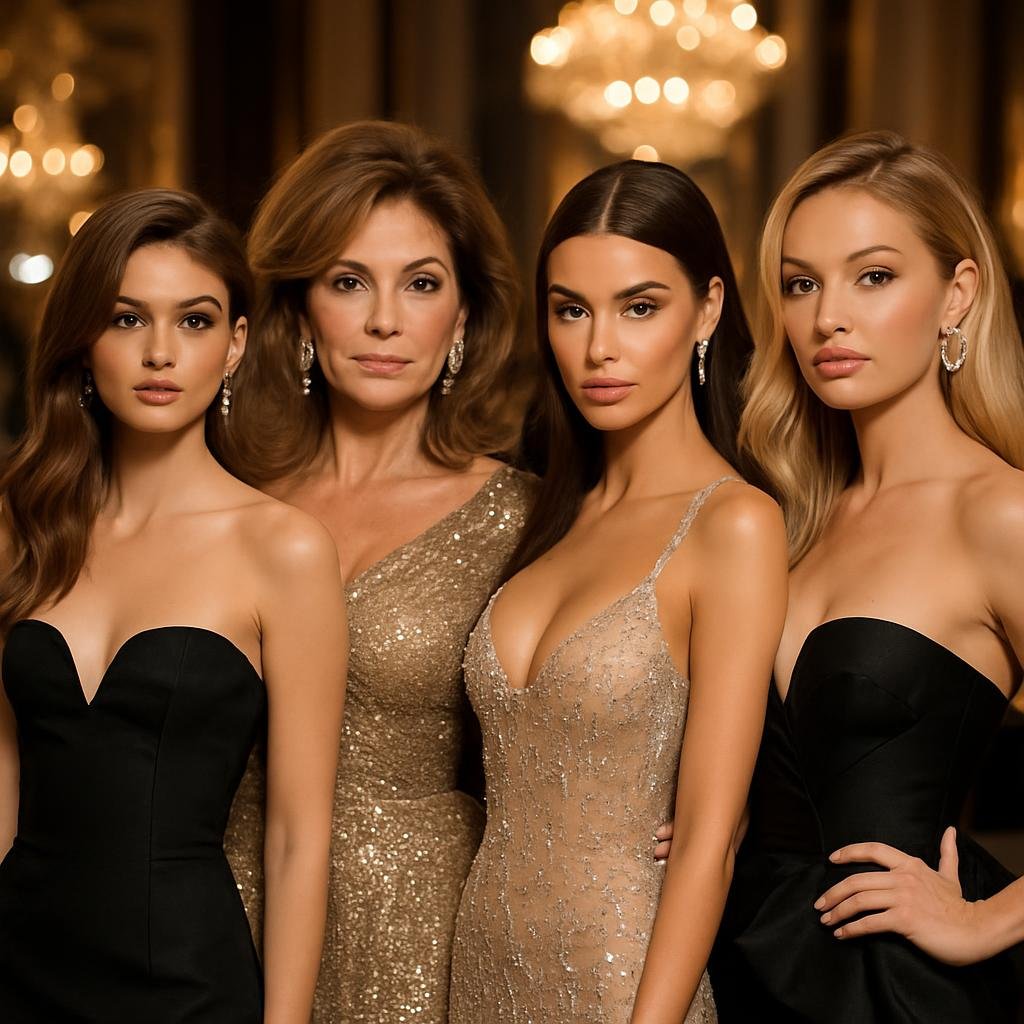
Covering Hollywood for over a decade, you learn quickly that few families have weaponized fame quite like the Kardashian-Jenners. What began as a 2007 E! reality experiment called Keeping Up with the Kardashians has ballooned into a $3 billion combined empire by 2025, a financial muscle that sits alongside some of America’s most storied dynasties. This isn’t mere reality-TV coin anymore; it’s a master class in converting red-carpet visibility into boardroom leverage.
From the jump, the family treated the show like a launchpad rather than an endpoint. Kim, Kourtney, Khloé, Kendall, Kylie and momager Kris turned twenty seasons and the subsequent Hulu reboot into personal-brand real estate. Cast salaries in later years ranged from $4 million to $15 million per season, with the clan collectively banking an estimated $300–400 million from the series itself. Yet those checks were always the appetizer; the real money flowed once they stepped off-camera and into boardrooms.
The wealth map inside the family tells its own story about who mastered the assignment. Kim Kardashian sits at the top with a $1.2 billion net worth, driven primarily by SKIMS, the shapewear line now valued near $4 billion. Kylie Jenner follows at roughly $900 million, anchored by Kylie Cosmetics (valued around $1.2 billion) and Kylie Skin. Kris Jenner’s management and production fees put her at $190 million, while Kendall’s modeling contracts and 818 Tequila stake land her at $150 million. Kourtney’s POOSH and beauty deals reach $100 million, and Khloé’s fashion and endorsement portfolio sits at $80 million.
What separates this crew from other Hollywood clans is deliberate diversification. Kim’s SKIMS and the sold majority stake in KKW Beauty (valued at $1 billion at the 2021 sale) operate in different lanes from Kylie’s cosmetics dominance or Kendall’s spirits play. Kourtney carved out wellness via POOSH, and Khloé co-owns Good American. The result is an ecosystem where cross-promotion happens naturally and competition between siblings stays minimal.
This is a story Black entertainment journalists have watched unfold for years: the careful cultivation of distinct personas that keep millions of followers inside one family tent. Kim leans into business-mogul and advocacy angles, Kylie owns the young-beauty-billionaire lane, Kendall handles high-fashion modeling, Kourtney claims wellness, and Khloé stays the relatable anchor. That segmentation creates endless marketing flywheels—teen fans buy Kylie, their mothers reach for SKIMS, and the whole crew tunes into Hulu.
The social media dominance underpinning these ventures cannot be overstated. With Kim commanding over 340 million Instagram followers, Kylie at 400+ million, and Kendall at 250+ million, the family controls one of the largest direct-to-consumer marketing channels in existence. Each post functions as unpaid advertising for their respective brands, translating follower counts into immediate retail velocity. When Kim wore SKIMS publicly, sales spiked measurably. When Kylie posted about Kylie Cosmetics, sell-throughs accelerated. This organic amplification would cost traditional brands hundreds of millions in paid media annually—the Kardashian-Jenners essentially manufacture it for free through their daily lifestyle content.
Beyond beauty and fashion, the family has quietly spread into real estate, production and select restaurant investments. Kim’s California properties alone top $100 million in strategic holdings. These moves provide the kind of insulation that keeps the dynasty resilient when any single sector cools. Kylie’s real estate portfolio similarly spans multiple states, with purchases in Holmby Hills, Hidden Hills, and Miami. Real estate serves dual purposes: it generates passive wealth appreciation while providing the luxury-lifestyle backdrop that keeps the family’s image premium and aspirational.
Production company ownership represents another underrated revenue stream. Through Kardashian Productions and related entities, the family has retained ownership stakes in the Hulu series and various spin-off projects. Rather than simply appearing on TV, they’ve positioned themselves as content creators and executive producers, capturing backend points and syndication revenue that legacy actors rarely secure. This approach mirrors how savvy musicians shifted from pure recording deals to owning masters and publishing—it’s about controlling the entire value chain, not just performing within it.
The influence on broader consumer behavior deserves examination as well. The Kardashian-Jenner effect has shaped contouring makeup trends, shapewear acceptance, high-waisted jeans cycles, and athleisure expansion. When Kylie launched Kylie Cosmetics in 2015 with a $29 liquid lipstick, she essentially democratized celebrity beauty launches and proved that Gen Z would buy directly from influencers rather than waiting for department-store distribution. That single move reset beauty industry playbooks across brands. Similarly, Kim’s advocacy around criminal justice reform and her passing the California bar exam brought serious-business credibility that insulated her wealth narrative from frivolous-celebrity critique.
Endorsement deals continue to flow strategically. The family has partnered with major corporations like Beats by Dre, Calvin Klein, Balenciaga, Adidas, and luxury brands that pay eight-figure fees for their association. Yet they’ve also turned down partnerships that misaligned with their brand positioning—selectivity that signals confidence and maintains premium positioning. This restraint separates them from celebrities who chase every paycheck and dilute their market value through overexposure in mismatched categories.
The Kardashian-Jenner financial model also reveals how celebrity taxation and wealth optimization work at scale. Managing a $3 billion collective fortune requires sophisticated accounting, entity structuring, and strategic timing around business sales. The family employs top-tier tax attorneys and business managers who deploy strategies like opportunity zones, deferred compensation structures, and calculated timing of asset sales to minimize tax burden. While these techniques are legal and available to all high-net-worth individuals, the Kardashian-Jenners’ ability to fund this infrastructure illustrates how wealth compounds for those who can afford expert guidance.
Looking ahead, the next generation is already being eased into the spotlight, signaling the empire plans to outlive the original cast. North West, Saint, Chicago and Psalm (Kim’s children), Stormi and Aire (Kylie’s), True and Tatum (Khloé’s), and others have appeared on family projects and social feeds, priming audiences for eventual brand extensions. Whether through fresh launches, potential IPOs or continued content ownership, the Kardashian-Jenner name remains shorthand for how personal branding, executed with surgical precision, can rival legacy corporate wealth. Love them or side-eye the machine, their grip on pop-culture economics shows no sign of loosening.