
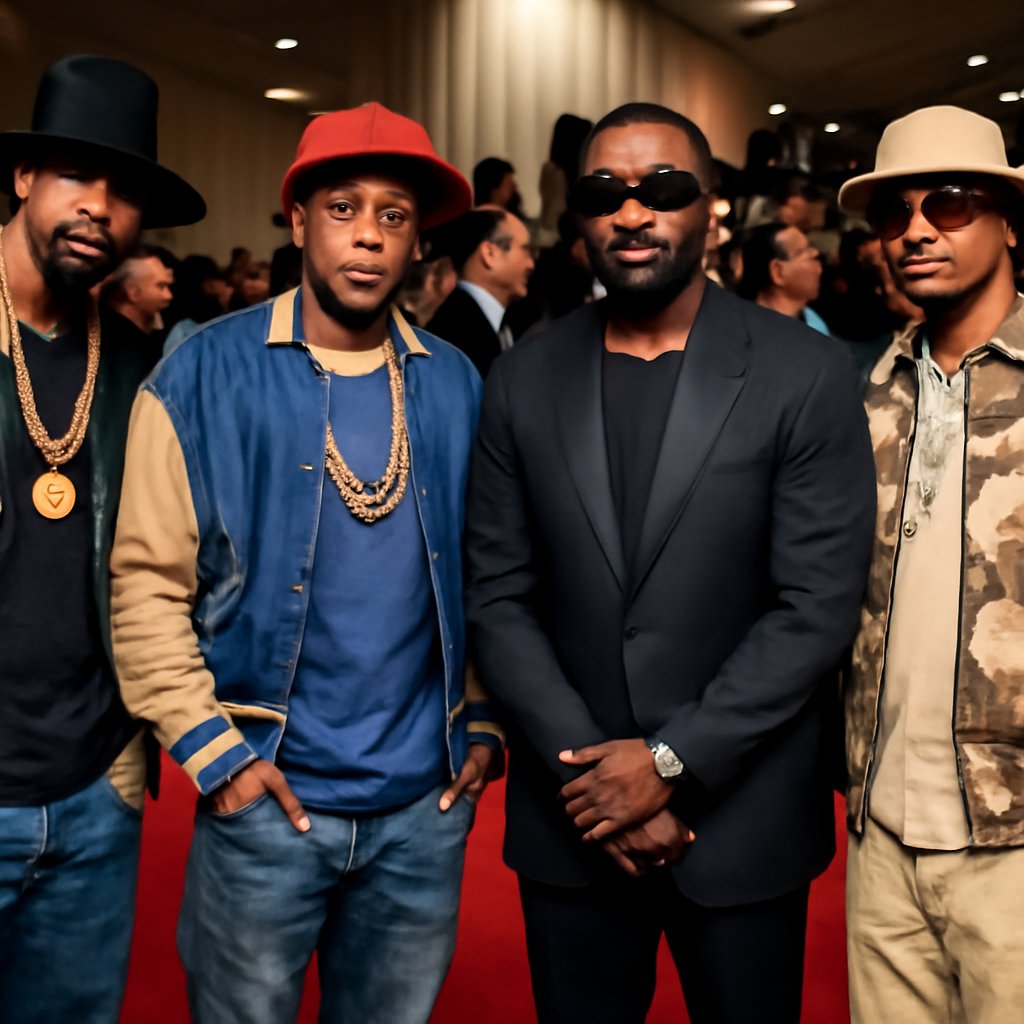
Covering Hollywood for over a decade, you learn quickly that the evolution of hip hop fashion trends isn’t just about clothes—it’s a mirror to music, celebrity culture, and those seismic shifts in pop culture that have turned Bronx block parties into a multibillion-dollar global industry, all shaped by the power players in Hollywood and our chart-topping artists.
The evolution of hip hop fashion trends began in the late 1970s and exploded during the 1980s with bold, functional pieces that supported breakdancing and graffiti culture. Artists like Run-DMC popularized Adidas tracksuits and shell-toe sneakers, turning everyday sportswear into status symbols that crossed into Hollywood films such as “Krush Groove.” These looks emphasized comfort and movement while signaling neighborhood pride through oversized jackets and Kangol hats. Celebrities including LL Cool J brought leather jackets and gold rope chains into mainstream visibility, blending rugged street aesthetics with emerging music video glamour. Pop culture embraced this raw energy, as MTV showcased performances that highlighted how hip hop fashion trends influenced urban youth worldwide and laid groundwork for future celebrity endorsements.
The 1980s also saw the emergence of Dapper Dan, the legendary Harlem designer who created custom Louis Vuitton and Gucci tracksuits for hip hop artists before those luxury houses officially partnered with the genre. Though facing legal battles from fashion houses protecting their intellectual property, Dapper Dan’s fearless approach to remixing high fashion with street culture became foundational to how hip hop would eventually reshape the entire luxury landscape. His legacy proved that Black creativity and entrepreneurship could challenge established fashion hierarchies, paving the way for future designer collaborations that would dominate the industry.
This is a story Black entertainment journalists have watched unfold for years, especially as the 1990s gangsta era took hold and the evolution of hip hop fashion trends shifted toward baggy jeans, bandanas, and oversized flannel shirts, heavily influenced by West Coast artists like Tupac Shakur and Dr. Dre. These styles appeared in movies such as “Boyz n the Hood,” merging cinematic storytelling with authentic street credibility that captivated audiences and boosted album sales. East Coast figures including The Notorious B.I.G. and Jay-Z elevated tailored suits mixed with flashy jewelry, creating a dual narrative of toughness and success. Hollywood began casting rappers in leading roles, further embedding hip hop fashion trends into entertainment, where red-carpet appearances started featuring customized sportswear and Timberland boots as must-have items that quietly rewrote the rules of who gets to claim space at those industry galas.
The 1990s introduced another crucial element to hip hop fashion: the rise of New Era fitted caps, Starter jackets representing specific sports teams (often worn by fans of opposing teams as a bold statement), and the prominence of FUBU (For Us By Us), a brand founded by Daymond John that became a symbol of Black entrepreneurship and community investment. These weren’t just accessories—they were declarations of identity and allegiance. The “Tommy Hilfiger moment,” when the brand became associated with hip hop culture after appearing in music videos and on album covers, demonstrated the crossover power of hip hop fashion influence. Though Hilfiger later clarified he never intended to exclude anyone, the mythology surrounding the brand’s connection to hip hop showed how deeply the culture could adopt and transform commercial products into cultural statements.
The 2000s marked a luxurious turn in the evolution of hip hop fashion trends as bling culture dominated with diamond-encrusted chains, oversized jerseys, and velour tracksuits worn by stars like Lil’ Kim and 50 Cent. This excess mirrored rising wealth in the music industry and found its way onto Hollywood red carpets through collaborations with designers like Louis Vuitton. The era introduced logos as status symbols at unprecedented scales—oversized belt buckles, visible brand names, and crystal-covered everything became the uniform of success. Brands like Rocawear, launched by Jay-Z in 1999, and G-Unit Clothing, built by 50 Cent, proved that rappers could create fashion empires rivaling established retailers. These weren’t licensing deals; these were artists building billion-dollar businesses that employed designers, manufacturers, and retail workers while staying authentically connected to hip hop’s core values.
Jewelry became increasingly prominent during this period, with pieces often reaching six or seven figures in value. Custom chains from jewelers like Jacob the Jeweler became status symbols as important as the music itself, with artists commissioning pieces that told stories of their success and neighborhood pride. The evolution of hip hop fashion trends during the 2000s essentially created a blueprint: if you wanted credibility in the industry, your style had to reflect both artistic vision and business acumen.
By the 2010s and 2020s, artists such as Kanye West with Yeezy and Cardi B redefined the space by partnering with major fashion houses, turning hip hop fashion trends into high-end streetwear that dominated pop culture conversations. Social media amplified these shifts, allowing quick global adoption of bucket hats, athleisure, and gender-fluid silhouettes inspired by performances at award shows. Instagram and TikTok transformed how quickly trends could spread, with a single red carpet appearance generating millions of searches within hours. Influencers without record deals began shaping fashion narratives as powerfully as platinum artists, democratizing the evolution of hip hop fashion trends while simultaneously making them more competitive and commercially valuable.
The rise of Virgil Abloh as a designer working with Kanye West and later serving as Creative Director of Louis Vuitton Men’s demonstrated how completely hip hop had infiltrated the upper echelons of fashion hierarchy. Abloh’s streetwear philosophy—marked by transparency, industrial aesthetics, and accessible luxury—came directly from hip hop culture’s ethos of innovation and boundary-pushing. His work showed that hip hop wasn’t just consuming fashion anymore; it was actively reshaping how established houses approached design, marketing, and cultural relevance.
Travis Scott’s collaborations with Nike, Jordan Brand, and Dior; Rihanna’s founding of Fenty; and Bad Bunny’s influence on gender-fluid fashion all represent how the evolution of hip hop fashion trends has expanded beyond music into lifestyle, technology, and social justice conversations. These artists are no longer just wearing clothes—they’re building movements that address representation, sustainability, and cultural authenticity in ways that traditional fashion houses had previously ignored.
Here are the numbers that tell the deeper story of Black excellence driving the business: The global hip hop fashion market surpassed $2.5 billion in annual revenue by 2023, driven largely by celebrity collaborations. Run-DMC’s 1986 Adidas deal marked the first major non-athlete endorsement in sports apparel history, fundamentally changing how brands approached celebrity partnerships. Streaming platforms show hip hop-related fashion searches increasing 340% during award season peaks. Over 60% of top-charting rap albums since 2015 feature artists wearing custom designer pieces in music videos. Hollywood productions incorporating hip hop aesthetics have generated more than $1 billion at the box office in the past decade. Additionally, hip hop artists have launched over 150 fashion brands since 2010, with combined valuations exceeding $8 billion, representing one of the most significant entrepreneurial success stories in modern business.
The evolution of hip hop fashion trends continues to shape music, celebrity lifestyles, and pop culture by blending authenticity with innovation. From humble street origins to Hollywood spotlights, these styles remain a dynamic force that celebrates creativity and cultural influence across generations. As younger artists continue pushing boundaries with gender expression, sustainability, and global influences, hip hop fashion will undoubtedly continue its trajectory as the most influential cultural force in global style conversations.